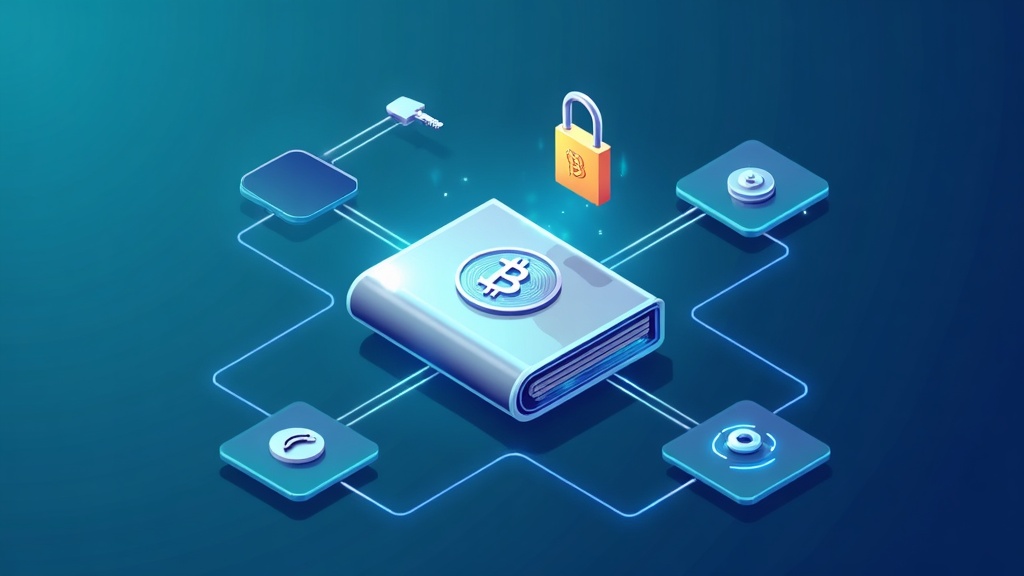
Bitcoin is often called "digital gold." It's a catchy comparison — scarce, durable, decentralized, hard to counterfeit. But there's a catch most people don't think about when they hear that phrase.
If you buy Bitcoin and leave it on an exchange, you don't directly control the underlying coins. In practice, you rely on the exchange's custody system and withdrawal process rather than controlling the private keys yourself. It's like buying shares of a gold ETF instead of holding physical gold in your hand — the ETF provider promises the gold exists in a vault somewhere, but what you own is a claim on paper, not the metal itself.
Disclaimer: This article is for educational purposes only. It does not constitute financial, investment, or legal advice. Cryptocurrency carries risk, and self-custody requires careful personal responsibility.
The Custody Problem
When you deposit Bitcoin on a centralized exchange like Binance, Coinbase, or Kraken, the exchange controls the private keys. You see a balance on your screen, but the actual coins sit in the exchange's wallets — pooled with everyone else's.
This matters because:
- Bankruptcy risk. If an exchange fails, recovery can depend on the exchange's terms, custody structure, jurisdiction, and bankruptcy process. In some failures, customers may be forced into a claims process rather than simply withdrawing coins. FTX customers learned this the hard way in 2022 — billions in customer funds were misappropriated, and withdrawals were frozen. Customers had to pursue recovery through the bankruptcy claims process instead of simply withdrawing their coins.
- Withdrawal freezes. Even without full collapse, exchanges can halt withdrawals during market stress, regulatory pressure, or technical issues. You generally cannot withdraw the exchange balance until the exchange re-enables withdrawals.
- Hacker target. Exchanges are high-value targets. When an exchange gets compromised, user funds are often the first to go.
- Counterparty trust. You're trusting the exchange's management, security practices, and solvency — the exact things Bitcoin was designed to eliminate.
The crypto community has a phrase for this: "Not your keys, not your coins." If you don't hold the private keys, you don't truly control the Bitcoin. What you control is a relationship with a company.
The Hardware Wallet Alternative
A hardware wallet is a dedicated signing device, often small enough to fit in your hand — built for one job: generating and storing private keys offline.
Here's what makes it different from an exchange:
| Exchange (custodial) | Hardware wallet (self-custody) | |
|---|---|---|
| Who holds the keys? | The exchange | You |
| Your balance represents… | A claim in the exchange's database | Bitcoin UTXOs on the blockchain that can be spent by the private keys you control |
| Can you withdraw anytime? | Only if the exchange allows it | You can initiate a transaction yourself, subject to network fees, connectivity, and confirmation conditions |
| What happens if the company fails? | Your funds may be lost or frozen | Nothing — the company doesn't hold your keys |
| Who can steal your coins? | Exchange hackers, insiders, or the company itself | Someone who obtains your seed phrase, passphrase, or tricks you into authorizing a malicious transaction — physical access is not required |
Reputable hardware wallets are designed so the keys are generated and kept on the device, instead of being exposed to an internet-connected computer. When you want to send Bitcoin, the transaction is signed on the device itself and only the signed broadcast leaves the device. In normal operation, reputable hardware wallets are designed so private keys stay on the device and only signed transaction data is shared.
This is conceptually similar to keeping physical gold in your own safe rather than trusting a bank vault. The risk shifts from "can I trust the custodian?" to "am I keeping my backup safe?"
The Self-Custody Tradeoff
Here's the honest part that many "buy a hardware wallet" articles skip:
Self-custody doesn't eliminate risk — it moves risk to you.
When you use a hardware wallet, the most critical piece of information is your seed phrase — typically 12 or 24 words generated by the wallet during setup. This seed phrase is a backup for your entire wallet. If you lose your seed phrase and later lose access to the hardware wallet itself, you may be unable to recover your Bitcoin. If someone else finds the seed phrase, they can spend the funds. And unlike a bank or exchange, there is no customer support hotline to call. The blockchain doesn't care.
This means you need a reliable backup strategy:
- Write your seed phrase on paper or stamp it onto metal. For most beginners, keep the seed phrase offline. Avoid photos, cloud storage, email, and cloud-synced password managers unless you fully understand the added risk.
- Keep it in a safe place — ideally a fireproof safe or a safe deposit box.
- Consider a second backup in a separate physical location (e.g., one in your home safe, another in a trusted family member's safe).
- Never enter your seed phrase into a website or unsolicited app. For hardware-wallet recovery, follow the manufacturer's official recovery flow, preferably entering the phrase on the device itself where supported.
Hardware wallets themselves are remarkably robust: if your device breaks, gets lost, or is destroyed, you can recover the entire wallet from the seed phrase on a new device. Many popular hardware wallets use BIP-39-style mnemonic backups, often 12 or 24 words, but users should verify the exact recovery standard for their device. The device is just a tool for secure signing; the seed phrase is what matters.
A Note on "Digital Gold" as a Metaphor
Calling Bitcoin "digital gold" is useful shorthand, but it's not a perfect comparison. Gold is a physical commodity with industrial uses and thousands of years of history as a store of value. Bitcoin is a digital asset with a much shorter track record. Neither is risk-free, and neither comparison should be taken as investment advice.
What the comparison does capture well: just as you wouldn't leave physical gold bars stored under someone else's name in a vault you don't control, you shouldn't leave your Bitcoin on an exchange unless you fully understand and accept the counterparty risk.
Getting Started
If you're ready to take self-custody of your Bitcoin, here's a high-level path:
- Choose a reputable hardware wallet. Popular options include Ledger, Trezor, Coldcard, and BitBox. Do your own research on each.
- Prefer buying directly from the manufacturer or an authorized reseller — avoid unknown or unauthorized third-party sellers (tampering risk).
- Set it up in a secure, private environment. Write down your seed phrase. Verify the recovery process before sending any significant amount.
- Send a small test transaction first. Confirm everything works before moving your full balance.
- Store your seed phrase safely — consider metal backups to protect against fire and water damage.
- Keep your hardware wallet firmware updated. Manufacturers release security patches regularly.
- Use a passphrase (optional). Many hardware wallets support an extra passphrase on top of the seed phrase. If set, the passphrase is needed alongside the seed to recover funds — adding a second layer of security.
The Bottom Line
Storing Bitcoin on an exchange is convenient, but you're trusting the exchange not to lose, freeze, or mishandle your funds. A hardware wallet gives you direct control over your keys — and by extension, your coins.
But that control comes with responsibility. For a basic single-seed setup, the seed phrase is the main point of failure; passphrases or multisig can change that risk model. Protect it, back it up properly, and understand that in the world of self-custody, you are your own bank — for better and for worse.
Want to check whether a specific Bitcoin address holds funds or explore the blockchain? Try our Bitcoin wallet checker tools.